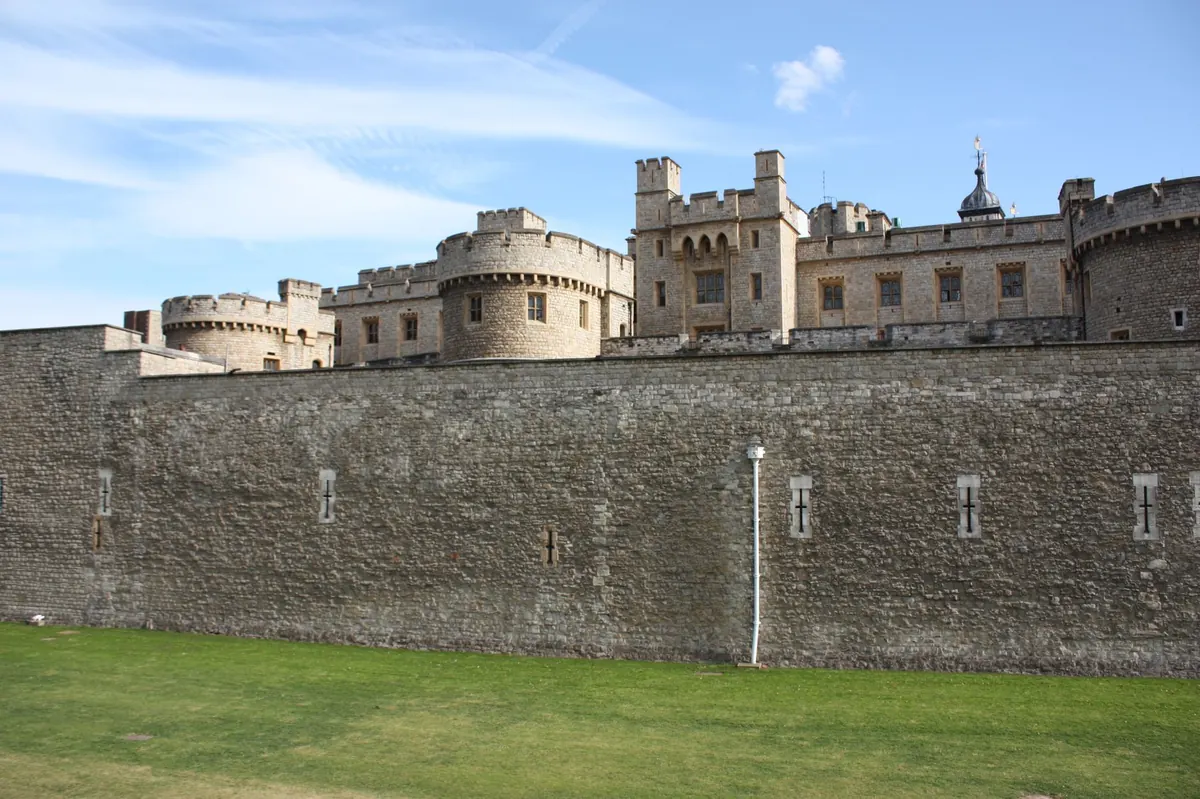
A folly is a building designed to mislead you. It pretends to be older, grander, sadder or more useful than it really is, and it often does so beautifully. That is the whole charm. It is also why so many relationships with follies begin in delight and end in an argument about mortar.
The mistakes people make are remarkably consistent. They believe the legend before they look at the stone. They date a building from its datestone. They assume a gothic arch means the eighteenth century and a concrete lintel means 1970. Separate the story from the evidence and a folly becomes far more rewarding: not a puzzle to be solved once, but a building you can read for years.
Mistake one: falling for the story before you look at the building
Every folly arrives with a story attached, and the story is usually older and more romantic than the truth. A ruined tower becomes a monk's cell. A shell house becomes a smuggler's refuge. A grotto becomes a prehistoric cave. These tales rarely begin as lies. An eighteenth-century owner builds a sham ruin, invents a history to make it more picturesque, and two centuries later the invention is repeated in guidebooks as fact.
So write the story down and set it aside. Note who told you, and when. Then go and look at the building, because fabric cannot be talked into agreeing with a legend. A "monk's cell" with machine-sawn stone, Victorian brick and a twentieth-century roof may still be a lovely place, but it is not medieval.
Mistake two: assuming old materials mean an old building
This is the error that catches most people. Reused stone was cheap, fashionable and everywhere. After the Dissolution, abbey masonry moved into houses, walls, garden seats and follies. Carved gothic fragments were collected and rebuilt into new structures. A building can contain thirteenth-century stonework and be entirely Georgian in conception.
The reverse is just as common. Follies were made with materials designed to look older than they were: Coade stone from the late eighteenth century, patent cements from the early nineteenth, cast iron painted to imitate timber, and later mass concrete textured to pass as rough rockwork.
What genuinely helps is learning to read the small signs:
- Brick: size, regularity and bond. Handmade bricks are typically thinner, less even and laid more irregularly than machine-made ones.
- Mortar: soft lime mixes with local sand, against the harder grey Portland cement mixes that appear from the later nineteenth century.
- Stone: fresh quarry faces, against reused blocks that often show older tool marks, awkward jointing or weathered faces turned inward.
- Glass: crown and early cylinder glass, against later sheet and plate glass.
- Iron: wrought iron, against mass-produced cast iron.
- Timber: hand-cut and pit-sawn marks, and the species chosen.
None of these decides anything alone. Together they start to build a case.
Mistake three: trusting the datestone
Follies carry more dates than most buildings, and more of them are misleading. A date may commemorate a rebuilding, a marriage, a coming-of-age, or an owner's wishful invention. Inscribed initials can be charming and entirely unrelated to construction. Builders have always been happy to carve something archaic in an old-fashioned hand.
Treat an inscribed date as a claim, not a fact.
What a date is usually telling you
Often it marks the moment a building was remodelled rather than raised. Many follies have two or three lives: a plain summerhouse gothicised, a tower heightened, a ruin deliberately re-ruined. Ask what else on the building matches the date — the brick, the roof structure, the window openings, the surrounding planting.
Mistake four: reading the landscape as evidence
Setting feels like proof. It is not. Plantations and drives were planted, felled and replanted. A view that once framed a tower may now be a wall of sycamore. A folly built as an eyecatcher from the house can be invisible in July and unmistakable in February. Ground levels change, ponds silt, ha-has collapse.
Use the landscape as a question rather than an answer. If the building aligns neatly with an older drive or avenue, that is worth pursuing. If it sits awkwardly, that too is information.
Mistake five: dating from a single visit
One visit gives you a mood, not a date. Light, season, undergrowth and weather all lie. Winter is usually best for fabric: low sun rakes across a wall and reveals changes in brick, patched mortar and blocked openings that a June afternoon hides completely.
More seriously, one visit encourages you to mistake repairs for original work. Almost every folly has been re-roofed, re-pointed, re-glazed and partly rebuilt, sometimes several times over. Later work is not a disappointment; it is part of the biography. Learn to spot the seams, and the building becomes easier to read, not harder.
How to date a folly properly
Work from the documents backwards, and from the outside in.
- Start in the record office. Estate maps, surveys, accounts, letters, sale particulars, tithe maps and enclosure awards often name a building and a date. Family papers that survive can be startlingly specific.
- Do a map regression. Compare the earliest county maps, the tithe map and successive Ordnance Survey editions. The first appearance of a building narrows the field quickly.
- Survey the fabric systematically. Sketch elevations, photograph the same wall in different lights, and record every change of material, joint and level.
- Separate the phases. Decide what is primary, what is repair, and what is later addition.
- Use science selectively. Dendrochronology can be excellent where timber survives with enough rings. Mortar analysis and thermoluminescence can help in skilled hands. None of it is a shortcut past the documents.
- Ask for help. County historic environment records, conservation officers, buildings archaeologists and local history societies know the pattern of local materials and dates far better than you do.
One caution. Do not probe, scrape, sample or repoint anything without permission. Follies are frequently listed buildings, sometimes scheduled monuments on private land, and physical investigation may need formal consent. If you are unsure, speak to the local authority conservation officer before you touch a single stone, and take professional structural or archaeological advice for anything more ambitious than looking.
Getting it right: a slow courtship
The people who get most from follies are the ones who take their time. Visit across several seasons. Read the building before the guidebook. Keep a notebook and a folder of photographs, dated and labelled. Ask the owner politely — many are delighted to talk, and some hold the one document you have been hunting for.
Accept that you may never get a single clean date. A building with three phases is more interesting than one with a datestone that happens to be true. Be sceptical, be gentle, and never confuse affection with evidence. That is how you date a folly, and it is also how you keep it.
Photo: christels / Pixabay